Sammy Baloji
Hibernus #3
2026
Sammy Baloji investigates how the historical and contemporary exploitation of natural resources in Katanga makes visible the enduring structures of colonialism. For Baloji, colonialism is not a closed chapter, but a system that continues to manifest itself in economic, cultural and epistemological structures. His work focuses in particular on the way in which African art objects were taken out of their original context and recategorized within Western knowledge and exhibition systems.
A recurring perspective in his practice is that every historical injustice produces its own ‘spirits’: carriers of knowledge that continue to circulate and demand reparation. In line with philosopher Valentin-Yves Mudimbe’s notion of reprendre (“taking back”), Baloji takes up and reappropriates traditional Congolese artifacts as a form of cultural restitution.
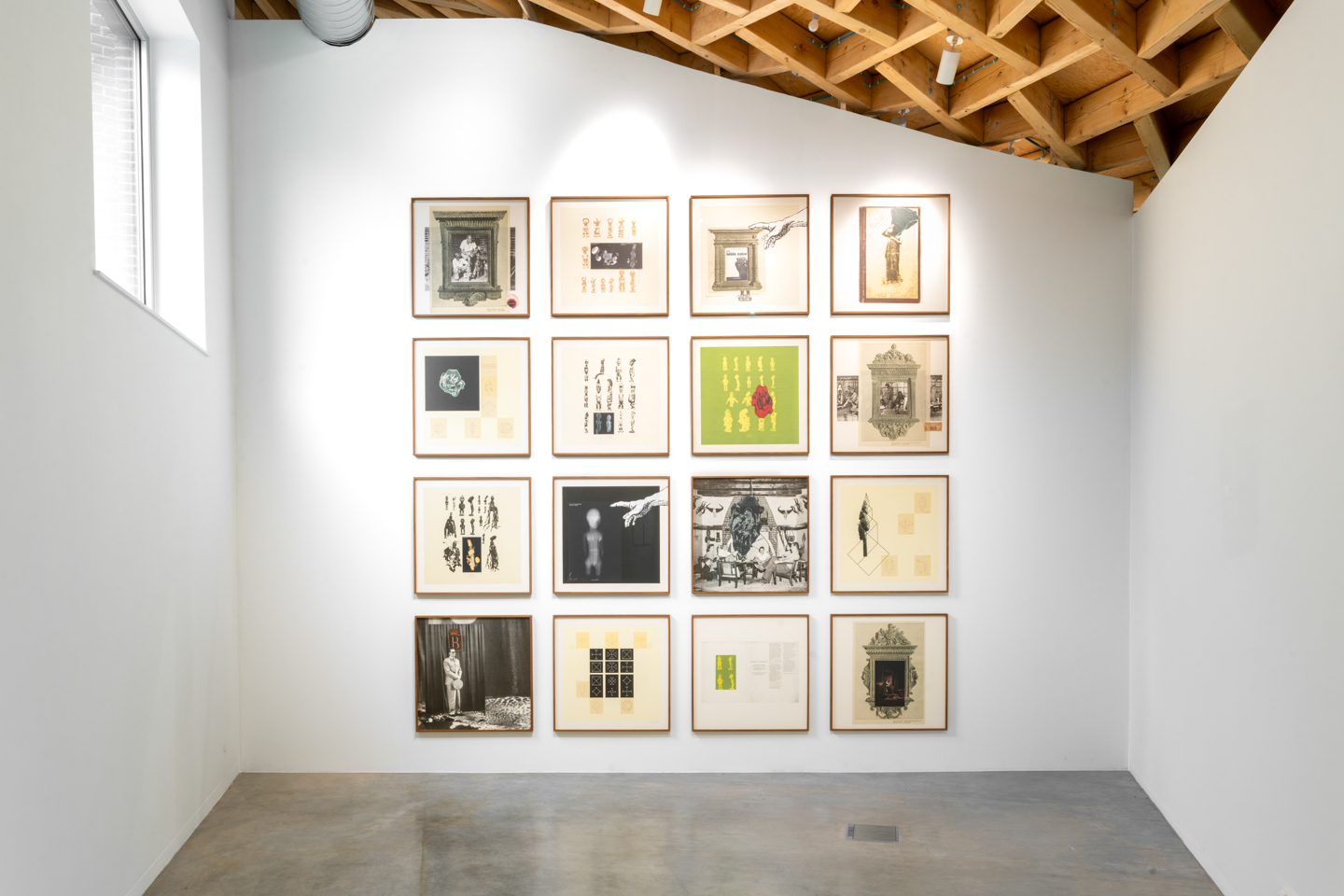
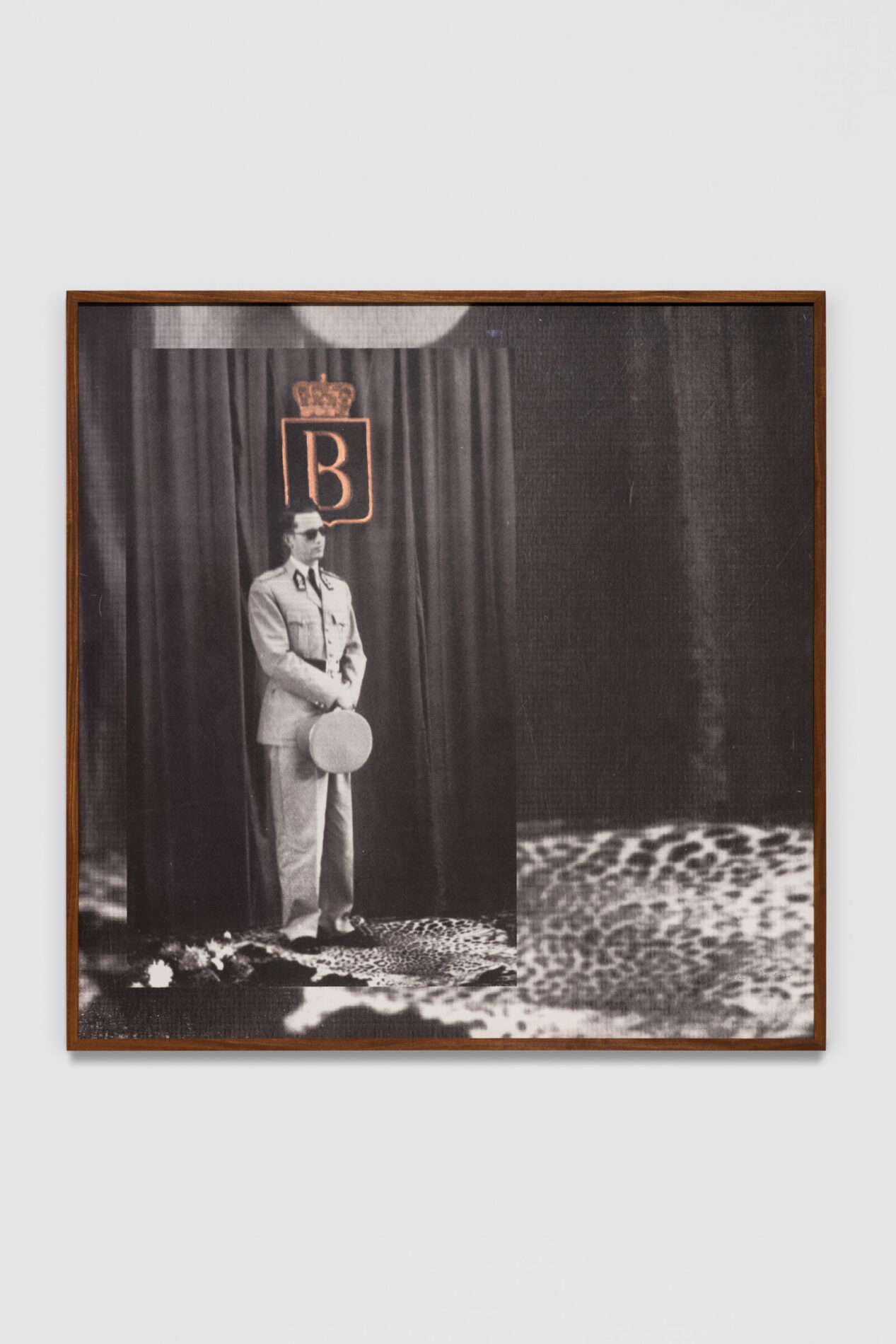
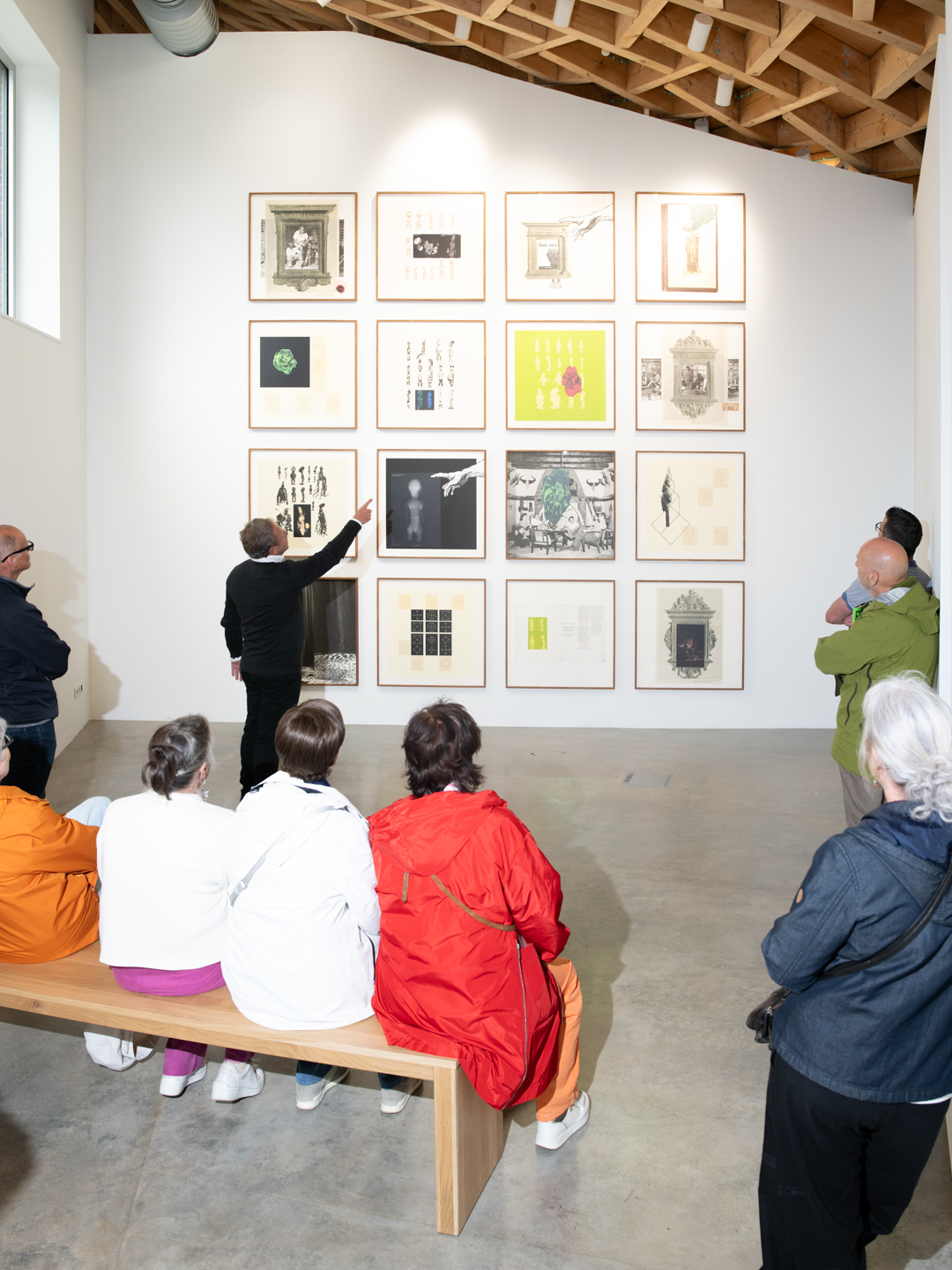
His contribution to Hibernus #3 consists of sixteen large collages in which Baloji brings together images of King Baudouin of Belgium and President Mobutu Sese Seko, pages from ethnographic catalogues and scans of Congolese objects from Western museums. Italian classicist references collide with colonial workshops, while mineral crystals from Congo are visually extracted. Instead of a traditional, static archive presentation, Baloji opts for an artistic gesture in print form, in which past and present are in constant dialogue with each other.
These sixteen works are part of Baloji’s installation for the main exhibition of the Venice Biennale 2026, In Minor Keys, accompanied by three enlarged sculptures inspired by objects from different collections: the first modernity, Belgian missionaries in Congo and the Mobutu regime in Zaire.
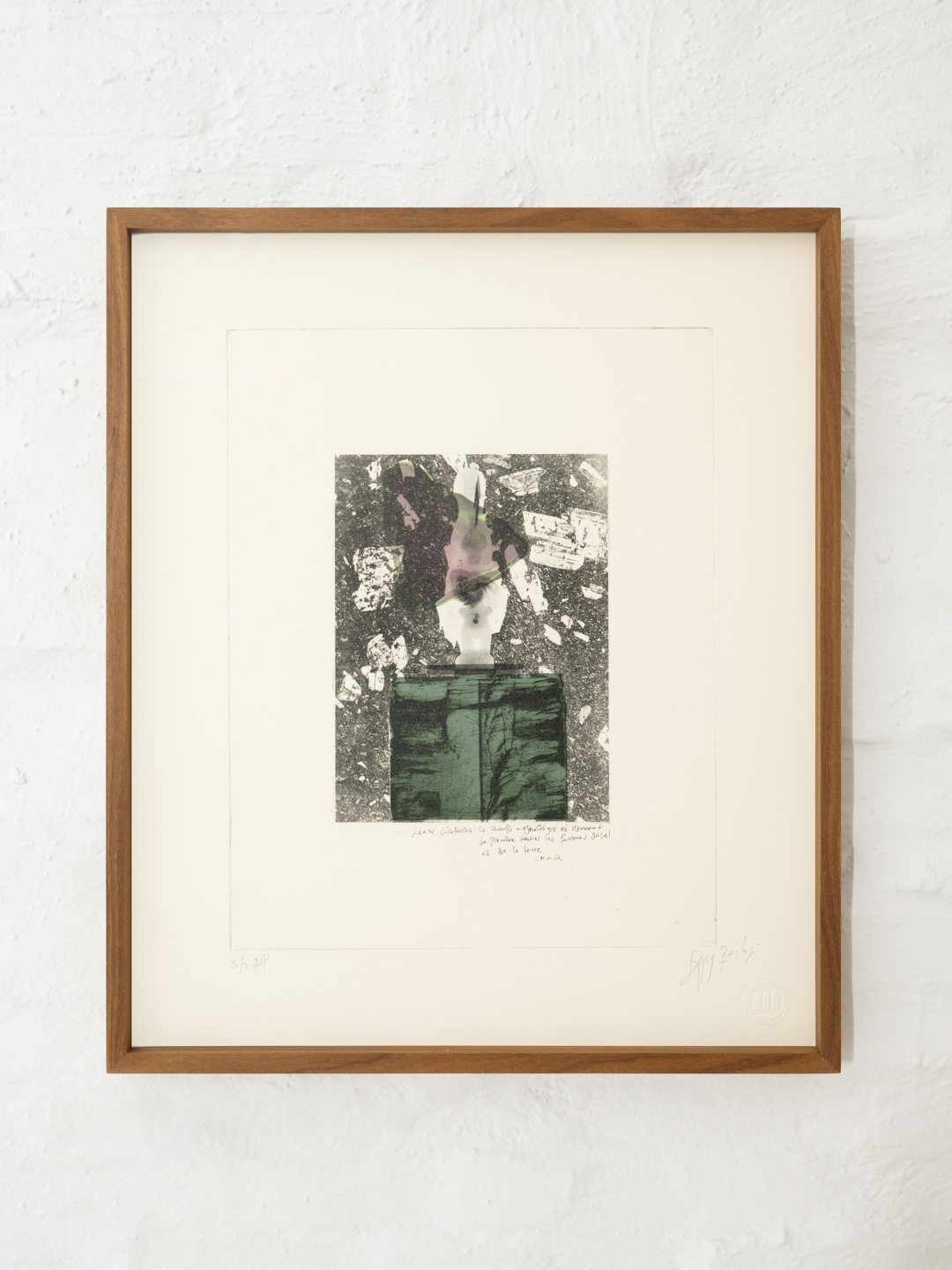
At the same time, Baloji created a stand-alone work for Hibernus #3 in which he continues this research: ‘… leurs cicatrices : ce champ magnétique où viennent se prendre toutes les formes du ciel et de la terre (Les Statues Meurent Aussi, Chris Marker & Alain Resnais, 1953)’ (2026). Starting from an X-ray image from the Rietberg Museum, combined with images of minerals, he shows how such scientific images reveal little of the original meaning of the object. For Baloji, this becomes a new form of alienation, but also a starting point for poetic speculation. The work critically reflects on consumption, transformation and reinterpretation, and questions how meaning is produced and moved today.